Educational Themes & Learning Lessons in Season 3 Reviewed: A Deep Dive into Structured Growth
When we talk about "Season 3" in an educational context, it’s far more than just another chapter; it signifies a pivotal stage in a child’s learning journey. Whether it's the third year of a primary curriculum, the latest installment of a beloved educational show, or a fresh cycle of seasonal classroom themes, Season 3 is where foundational knowledge deepens, critical thinking sharpens, and abstract concepts begin to solidify. It’s a period designed to build robustly on prior learning, presenting new challenges and fostering a more sophisticated understanding of the world. This article explores the rich tapestry of educational themes and learning lessons that define this crucial phase, offering a journalist’s eye on how educators and parents can harness its potential.
At a Glance: What "Season 3" Brings to Learning
- Deeper Engagement: Moves beyond basic recognition to analytical thinking and practical application.
- Integrated Learning: Seamlessly blends subjects like science, math, and literacy through engaging themes.
- Enhanced Social & Emotional Skills: Addresses more complex interpersonal dynamics and emotional regulation.
- Global Perspectives: Introduces broader cultural awareness and diverse ways of life.
- Real-World Connections: Uses seasonal changes and everyday phenomena to make learning tangible.
- Skill Refinement: Focuses on developing fluency in reading, writing, and problem-solving strategies.
- Active Participation: Encourages hands-on experiments, creative projects, and outdoor exploration.
Beyond the Basics: Why "Season 3" is a Growth Catalyst
In the continuum of a child's education, "Season 3" typically represents a significant leap forward. The initial stages (Season 1, Season 2) often focus on introducing core concepts and building basic literacy and numeracy. Season 3, however, is where children are challenged to apply that knowledge, synthesize information, and develop more nuanced understandings. It’s a stage where curiosity blossoms into structured inquiry, and rote memorization gives way to genuine comprehension.
Consider how children's educational television shows, for instance, evolve their content. A "Season 3" often introduces more complex narratives, intricate problem-solving scenarios, and a wider array of characters and settings, all designed to foster advanced cognitive and social skills. For a compelling example of this progression, you might want to Explore Mickey Mouse Clubhouse Season 3 to see how beloved characters engage children in increasingly sophisticated challenges. This progressive layering of complexity mirrors what we see in effective primary education curricula.
Foundational Pillars: Core Learning Benefits Amplified
The lessons learned during Season 3 are not merely extensions of earlier themes; they are sophisticated evolutions that aim to cultivate well-rounded, thoughtful individuals.
Fostering Critical Thinking and Problem-Solving
Season 3 challenges children to move beyond simple recall, pushing them to analyze situations, identify problems, and devise creative solutions. Educational content at this stage often presents multi-step puzzles or dilemmas, prompting young viewers and learners to utilize logic, reasoning, and even hypothesis testing. This cultivation of critical thinking is vital, helping children to not only understand what happens but why and how to influence outcomes. They learn to question, evaluate, and make effective decisions, skills that are invaluable throughout their lives.
Navigating the Emotional Landscape with Greater Depth
As children mature, their emotional experiences become more complex. Season 3 often delves into these nuances, portraying characters dealing with a broader spectrum of feelings—from the frustration of failure to the joy of collaboration or the sadness of saying goodbye. By observing how characters cope with anger, fear, happiness, or sadness, children gain accessible models for recognizing, articulating, and managing their own emotions. This observational learning builds emotional intelligence, teaching positive coping mechanisms and fostering empathy for others' feelings. It's about understanding that emotions are valid, and there are constructive ways to process them.
Embracing Diversity and Global Citizenship
The third stage of learning is an opportune time to expand a child's worldview. Season 3 programming or curriculum frequently introduces children to a richer tapestry of cultures, traditions, and perspectives from around the globe. This exposure is crucial for fostering respect, understanding, and inclusivity. By showcasing diverse characters, languages, celebrations, and ways of life, children learn to appreciate differences and recognize the shared humanity that connects us all. This foundation in cultural awareness helps shape them into global citizens who are open-minded and appreciative of the world's rich variety.
Connecting to the World: Seasonal Learning as a "Season 3" Framework
One of the most potent frameworks for delivering "Season 3" educational themes, particularly in primary education, is through seasonal learning. This approach naturally connects children to their immediate environment and the rhythms of the year, making learning profoundly relevant, authentic, and engaging.
The Power of Relevance and Engagement
Imagine learning about plant life cycles not from a textbook, but by planting seeds in spring and watching them sprout, or studying weather patterns by observing a real rain gauge you built yourself. This hands-on, real-time observation boosts student motivation and enthusiasm dramatically. Seasonal learning inherently ties curriculum to experience, making abstract concepts concrete and relatable. It moves education from passive reception to active participation.
Cross-Curricular Explorations: Weaving Knowledge Together
The beauty of seasonal themes is their ability to integrate seamlessly across subjects. A unit on autumn, for example, isn't just about leaves; it can involve:
- Science: Classifying leaves, observing weather changes, understanding migration.
- Math: Counting fallen leaves, measuring pumpkins, graphing seasonal data.
- Literacy: Writing harvest stories, reading books about autumn, building vocabulary around nature.
- Art: Leaf printing, creating collages with natural materials.
This cross-curricular approach creates deeper understanding and shows children how knowledge is interconnected, not siloed into separate subjects.
Examples of Seasonal Learning Opportunities in a "Season 3" Context: - Autumn (Fall): Dive into leaf classification (deciduous vs. evergreen), explore harvest topics through local farm visits or classroom gardening, and observe dramatic weather changes and their impact on nature.
- Winter: Investigate states of matter by making and observing ice and snow, learn about hibernation through animal studies, and explore global celebrations like Diwali or Chinese New Year.
- Spring: Focus on plant growth cycles, insect life cycles (butterflies, bees), and the return of migratory birds. This is prime time for planting seeds and observing daily changes.
- Summer: Study local habitats, engage in water studies (evaporation, condensation), and learn about food chains within local ecosystems. Outdoor exploration is at its peak.
Deep Dives: Subject-Specific Learning in "Season 3"
Building on the natural flow of the seasons, Season 3 offers ample opportunities to deepen subject-specific knowledge in highly engaging ways.
Literacy Skills: From Weather Journals to Themed Narratives
Literacy in Season 3 moves beyond basic reading and writing to fostering more sophisticated comprehension, vocabulary, and creative expression.
- Weather Vocabulary Wall: Introduce scientific terms like "precipitation," "forecasting," and "meteorology" as children track daily weather.
- Weather Journals: Encourage daily observations, recorded with both words and pictures, linking science to writing.
- Authentic Texts: Use real newspaper weather reports or video forecasts for comprehension work, connecting classroom learning to current events.
- Creative Writing: Turn pupils into "class meteorologists" who write and present their own weather reports, integrating oral language skills with written composition.
- Tailored Reading Lists: Curate books that align with seasonal themes, such as stories about snow and hibernation for winter, or tales of spring blossoms and new life.
- Themed Word Walls: Feature words like "blossom," "pollination" (spring) or "crisp," "deciduous" (autumn) to expand vocabulary in context.
- Writing Prompts: Create a "Seasonal Writing Corner" with themed stationery and prompts for leaf poetry (autumn), garden journals (spring), or postcard projects (summer).
Mathematical Foundations: Counting the Seasons, Graphing Growth
Math becomes more experiential and data-driven in Season 3, reinforcing concepts through real-world applications.
- Counting and Sorting: Use seasonal items like autumn leaves (sorted by shape, size, color) for counting, categorization, and patterning activities. Spring flowers can be used for addition, and "melting snowballs" for subtraction.
- Patterns: Create repeating patterns with natural items collected outdoors, like pinecones, acorns, and pebbles, to understand sequencing and logic.
- Data Collection & Graphing: Set up a classroom weather station to record daily temperature, rainfall, and daylight hours. Children can then create pictographs for younger learners or bar/line graphs for older ones, developing data literacy skills. This teaches not just how to collect data, but how to visualize and interpret it.
Scientific Discovery: Unpacking Nature's Cycles
Season 3 science education is all about hands-on investigation, observing the dynamic changes in the natural world.
- Weather Experiments:
- Class Rain Gauge: Construct a simple gauge from a plastic bottle to measure and record daily rainfall, leading to discussions about precipitation.
- Cloud in a Jar: Demonstrate condensation by creating a cloud using a glass jar, hot water, and an ice-filled plate.
- Wind Speed/Direction: Build simple anemometers with paper cups and straws to measure and compare wind patterns.
- Plants and Animals: Document plant growth cycles through planting bulbs and observing their development. Track migratory patterns by setting up bird-watching stations. Record all observations in dedicated science journals, fostering scientific inquiry and documentation.
- Playground Weather Station: Set up basic instruments to collect and graph temperature data, track shadow changes throughout the day, and study different cloud formations. This builds observational skills and understanding of meteorology.
Social Studies & Cultural Immersion: Exploring Traditions
Season 3 expands social studies beyond local communities to encompass historical events and diverse cultural celebrations, fostering a sense of global awareness.
- Historical Events: Connect specific months or seasons to significant historical events (e.g., Martin Luther King Jr. Day in January, Earth Day in spring), discussing their importance and impact.
- Cultural Celebrations: Explore festivals from around the world, such as Diwali (autumn), Chinese New Year (winter), or Eid (which follows a lunar calendar), teaching about different traditions, beliefs, and values.
- Cultural Calendar Activity: Create a classroom calendar, marking various celebrations throughout the year. Invite families to share artifacts, stories, and traditions related to their cultural heritage, creating a truly inclusive learning environment.
Creative Expression: Art from Nature's Palette
Art projects in Season 3 leverage natural materials and seasonal themes to encourage imagination and fine motor skills, often with a sustainable twist.
- Natural Materials: Collect leaves, pinecones, twigs, pebbles, and shells for art projects. Activities like leaf printing (autumn) or creating seasonal collages with pressed flowers, dried grasses, or shells teach about texture, color, and composition.
- Holiday Crafts:
- Winter: Craft paper snowflakes, handprint wreaths, or ornaments from recycled materials.
- Spring: Engage in egg decorating using natural dyes or weave Easter baskets.
- Autumn: Paint pumpkins, create corn husk dolls, or make bird feeders from pinecones.
- Emphasize designing activities using everyday materials, especially when resources are limited, fostering resourcefulness and creativity.
Designing an Enriched Learning Environment for "Season 3"
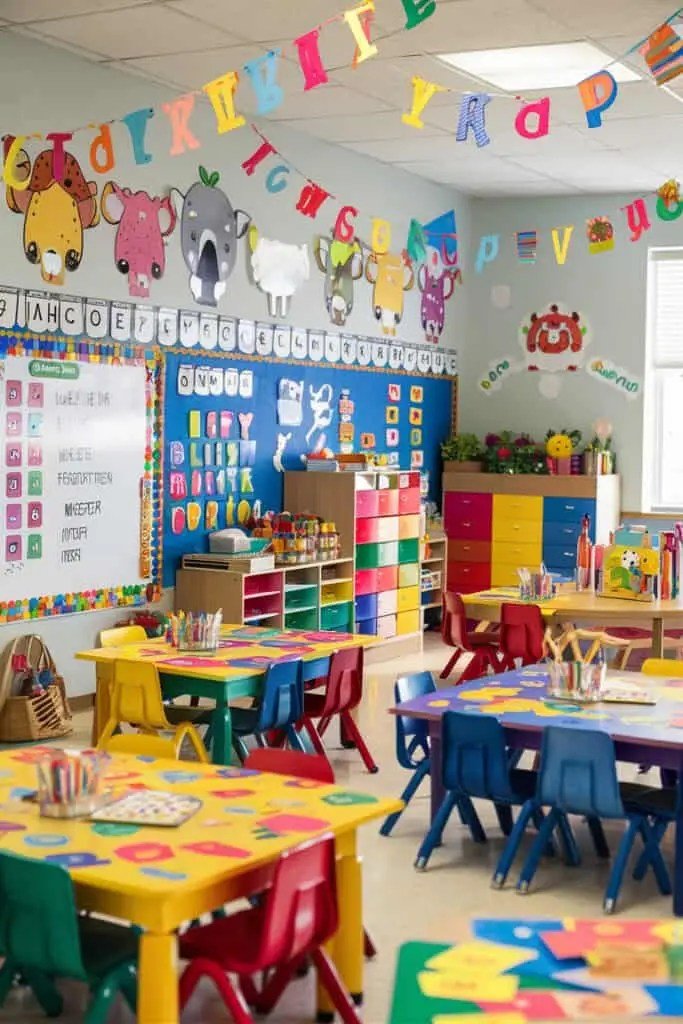
The physical learning space plays a crucial role in reinforcing "Season 3" educational themes, making the environment itself a teaching tool.
The Seasonal Classroom Display: A Living Canvas
Your classroom should reflect the learning journey, changing to align with current seasonal themes. This central display board acts as a visual anchor.
- Autumn: Warm tones with real or crafted leaves, photos of harvest scenes.
- Winter: Snowy landscapes, images of hibernating animals, festive winter celebrations.
- Spring: Pastel colors, vibrant flowers, images of sprouting plants and baby animals.
- Summer: Bright, energetic hues with beach themes, water activities, or local wildlife.
- Reading Corner: Enhance this space with seasonal cushions, a curated selection of themed books, and props that invite imaginative play.
- Window Decorations: Simple tissue paper leaves or snowflakes crafted by pupils can transform the room and provide a sense of shared ownership.
- Engage Pupils in Crafting: Involving children in making decorations fosters pride and reinforces learning. Think leaf rubbings, paper snowflakes, seed planting, or shell picture frames.
Outdoor Adventures: Taking Learning Beyond the Walls
The "Season 3" curriculum is incomplete without ample outdoor learning. The natural world is the ultimate classroom, offering authentic, hands-on experiences that no textbook can replicate.
- Observe Seasonal Uniqueness: Encourage children to notice the subtle differences: the vibrant growth of spring, the buzzing wildlife of summer, the dramatic leaf changes of autumn, or the frost patterns of winter. These observations build keen sensory awareness and scientific curiosity.
- Outdoor Activities by Season:
- Spring: Plant seeds in a garden plot, engage in bird watching, measure rainfall.
- Summer: Conduct insect hunts, identify local flowers, perform shadow experiments to understand the sun's path.
- Autumn: Collect and classify leaves, track bird migration patterns, participate in harvest-related activities.
- Winter: Observe frost formation, identify evergreen trees, look for animal tracks in snow or mud.
- Preparation is Key: Always have backup indoor activities for unexpected weather. Ensure easy access to essential resources like magnifying glasses, collection containers, notebooks, and pencils.
- Proper Clothing: Emphasize the importance of layering and appropriate gear for different seasons. Teach the science behind why certain clothing works best (e.g., waterproof jackets for rain, insulated coats for cold). Consider a class set of spare items. For instance:
- Spring: Light jumper, waterproof jacket, wellies.
- Summer: Sun hat, light shirt, sunglasses.
- Autumn: Fleece, windproof jacket, waterproof boots, gloves.
- Winter: Thermal top, heavy jumper, insulated coat, hat, scarf, waterproof gloves.
Maximizing Educational Impact: Tips for Parents and Educators
Making the most of "Season 3" learning, whether through a structured curriculum or engaging media, requires intentional effort.
Selecting Appropriate Resources
For parents, this means carefully choosing educational shows or apps that align with learning goals, moving beyond mere entertainment. Look for content that actively teaches, encourages problem-solving, and promotes positive social messages, rather than just passively absorbing screen time. For educators, it’s about curating resources that are developmentally appropriate, culturally sensitive, and align with curriculum objectives.
Encouraging Discussion and Interaction
The true learning happens when children process information. After watching an educational show or completing a seasonal activity, engage them in conversations: "What did you learn today?" "How did the characters solve that problem?" "Why do leaves change color?" These discussions help solidify understanding, clarify misconceptions, and encourage critical thinking. Turn passive experiences into active learning opportunities.
Turning Passive Learning into Active Engagement
Don't just observe; do. If a show features a science experiment, try replicating a simplified version at home or in the classroom. If it introduces a new culture, research it further or try a related craft or recipe. For seasonal learning, ensure children are actively participating in planting, observing, measuring, and creating. This hands-on approach transforms abstract ideas into tangible experiences, fostering deeper connections and retention.
The Road Ahead: Continuing the Learning Journey
"Educational Themes & Learning Lessons in Season 3" lay critical groundwork, but the learning journey is, of course, continuous. By understanding the intentional design and inherent benefits of this stage, parents and educators can work together to cultivate a lifelong love of learning. It’s about building a robust foundation that equips children not just with knowledge, but with the skills, curiosity, and emotional intelligence to navigate an ever-changing world. Embrace each new season of learning as an opportunity for growth, discovery, and deeper connection to both the academic world and the vibrant world around us.